
Palestinian embroiderer preserves ancient craft after fleeing Gaza conflict
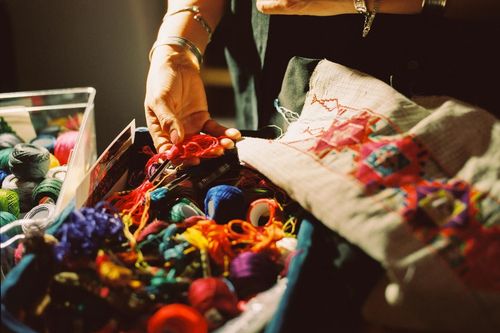
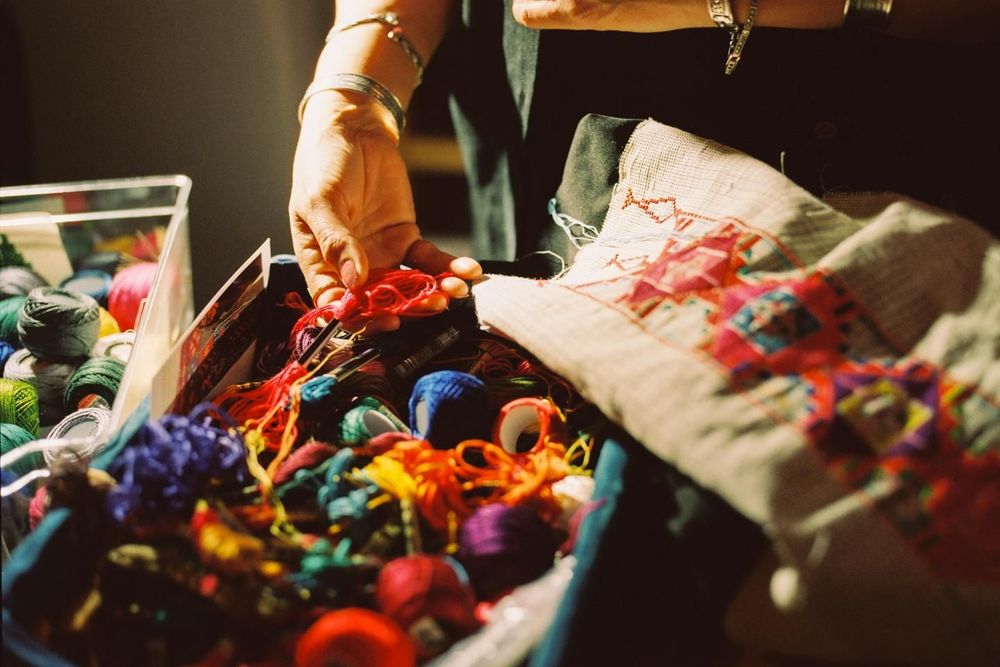
In a sun-filled studio in Paris's 13th arrondissement, Maha Al-Daya displays the sole garment she salvaged from her wardrobe in Gaza: a black shirt adorned with green and orange cotton thread depicting the tree of life. The 50-year-old Palestinian embroiderer, her eyes lined with traditional black kohl, arrived in France in January 2025 through the PAUSE program, which supports displaced scientists and artists. Launched in January 2017 by the Collège de France with backing from French ministries including Higher Education and Research, Interior, Europe and Foreign Affairs, and Culture, the initiative has assisted 570 scientists and 85 artists since its inception.
Al-Daya now occupies an apartment filled with plants, reminiscent of her former home, where she lives with her husband and four children. Her craft, tatreez, represents a cross-stitch embroidery tradition passed from mother to daughter across three millennia. While the earliest surviving physical examples of Palestinian embroidery date to the 1840s, with cross-stitch becoming widespread by the late nineteenth century, the tradition's roots extend to the Canaanite era. On December 15, 2021, during the 16th session of the Intergovernmental Committee for the Safeguarding of the Intangible Cultural Heritage, UNESCO inscribed Palestinian tatreez on its Representative List of the Intangible Cultural Heritage of Humanity.
A tradition of cultural significance
Known as fallahi or farmers' embroidery, tatreez was traditionally practiced by village women throughout southern and central Historic Palestine. The craft carries deep cultural significance: patterns and colors historically varied from village to village, with women's embroidered clothing serving as visual markers of regional origin, social status and marital status. After the 1948 Nakba, tatreez evolved into an act of memory and resistance, with displaced women continuing to stitch and carry their patterns into exile.
Building and losing a life in Gaza
Before the current conflict, Al-Daya had built a thriving business in Gaza through word of mouth, employing four people and creating embroidered pieces for weddings and significant events. Her reputation for quality work spread throughout the enclave, establishing her as a recognized master of the craft.
The war erased that life. Al-Daya's 86-year-old father died in Rafah hospital in January 2024. One of her employees was killed in bombing around the same time. Now, only photo albums remain as evidence of her previous existence, images she examines with visible pain.
At least we are alive.
The conflict has devastated Gaza's population. Research from the Max Planck Institute for Demographic Research and the Centre for Demographic Studies indicates that by October 2025, conflict-related deaths likely surpassed 100,000. The same institute reported that life expectancy in Gaza fell by 47 percent in 2024 compared with projections absent the war, representing a loss of 36.4 years.
Preserving tradition through loss
Despite the profound losses, Al-Daya continues her work with needle and thread, preserving a tradition that has survived displacement, occupation and now another generation of conflict. In her Paris studio, surrounded by plants that echo her former garden, she maintains the ancient practice that connects her to countless Palestinian women who stitched before her and those who will stitch after.