
Thousands march in Brussels against austerity measures ahead of budget announcement
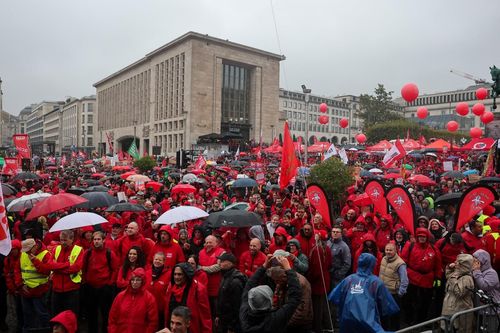
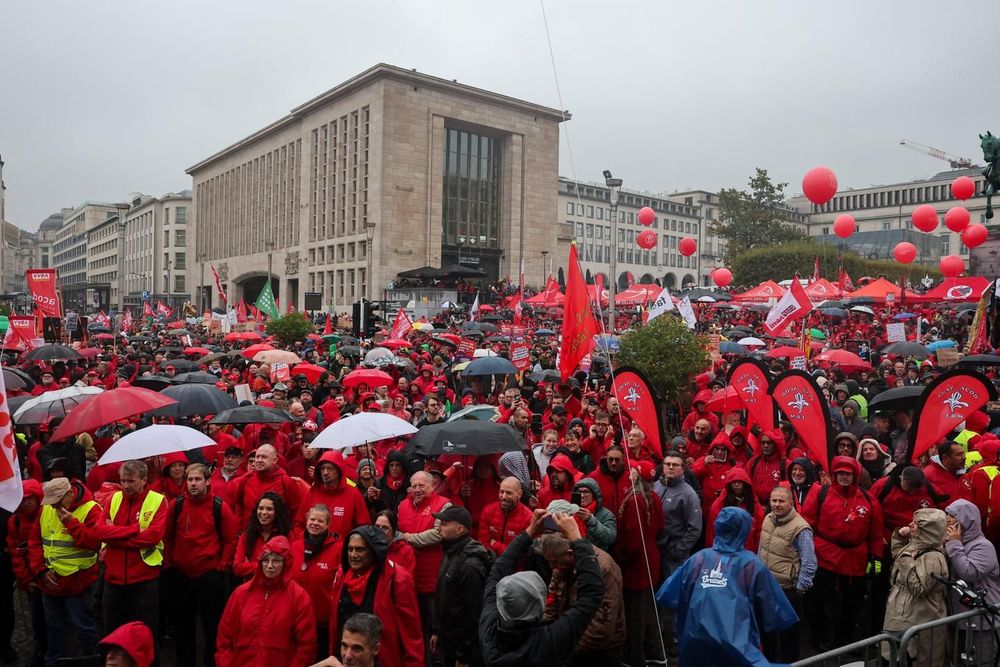
Tens of thousands of demonstrators converged on Brussels on Friday, October 9, 2026, in a sweeping protest against the socio-economic policies of Prime Minister Bart De Wever's government. Police estimated the crowd at 30,000, while union organizers put the figure at 50,000, as railway workers, teachers, students, refugee advocates, artists and civil servants marched through the Belgian capital just days before the government's October 13 budget presentation.
Belgium's fiscal crisis drives austerity agenda
The protest reflected widespread discontent with the government's austerity agenda, driven by Belgium's deteriorating fiscal position. The country's deficit widened to 5.2% of GDP in 2025 from 4.4% the previous year, placing it among the highest in the European Union. Public debt climbed to 107.9% of GDP in 2025, far exceeding the EU's 60% threshold and making Belgium the fourth most indebted nation in the bloc.
The government aims to reduce spending by 10 billion euros over the coming years to address these imbalances. The fiscal crisis has attracted attention from credit rating agencies, with both S&P and Moody's downgrading Belgium's creditworthiness in 2026. The European Union has also intervened, formally establishing in July 2026 that Belgium was in excessive deficit due to non-compliance with EU budget rules.
Diverse coalition of protesters takes to the streets
From his vantage point overlooking Place de l'Albertine near the central train station, Léon Poncin, a retired civil servant in his seventies, observed the demonstration with a mixture of surprise and satisfaction. Wearing a vest from the "angry old folks gang" — a collective formed eight years ago in response to pension reforms introduced by then-minister Daniel Bacquelaine — Poncin noted the remarkable diversity of participants.
"It's not so much the number of participants that surprises me, but the diversity of groups involved. Today we're faced with a government that's turning more and more to the far right, and I don't know who can accept that."
De Wever's coalition government faces growing opposition
De Wever, who leads the Flemish nationalist N-VA party, was sworn in as Belgium's first Flemish nationalist Prime Minister on February 3, 2025, following more than eight months of coalition negotiations after the June 2024 federal elections. His government is a five-party "Arizona coalition" comprising N-VA, CD&V and Vooruit from Flanders, along with MR and Les Engagés from the French-speaking region.
The October 9 demonstration in Brussels followed a week of heightened tensions in Liège, where clashes between police and students protesting education budget cuts resulted in more than 200 arrests and dozens of injured officers. The unrest in the French-speaking city underscored the mounting opposition to fiscal retrenchment, particularly in the education sector.
As the government prepares to unveil its budget on October 13, the scale and breadth of Friday's protest signaled that resistance to austerity measures extends across Belgium's linguistic, professional and generational divides. The mobilization represents a significant challenge for De Wever's administration as it seeks to navigate the country's fiscal crisis while managing public opposition to spending cuts.