
Two French intellectuals turn to organic farming as answer to ecological crisis
Taking Voltaire's famous advice to heart, two prominent French thinkers have traded their desks for garden plots, embracing manual labor as an ethical response to environmental breakdown. Charles Stépanoff, an acclaimed anthropologist at the School for Advanced Studies in the Social Sciences (EHESS), and Gaspard Koenig, a philosopher and novelist, have each established organic farms where they practice what they preach about humanity's relationship with nature.
Their decisions reflect more than personal whimsy. In France, agriculture accounts for 20% of greenhouse gas emissions while contributing to biodiversity loss and widespread pollution of water and soil. Yet paradoxically, despite government subsidies, about a quarter of French farmers live below the poverty line according to INSEE statistics.
Stépanoff transforms scholarship into sustainable farming
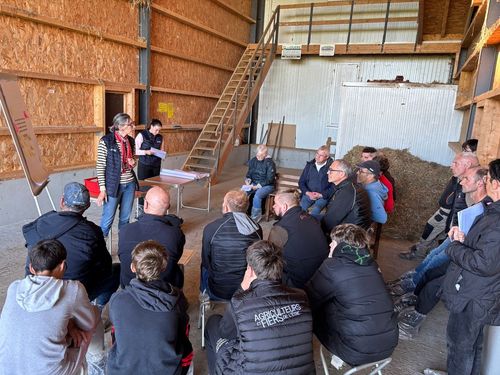
Stépanoff, whose 2024 book Attachements published by La Découverte examines how humans forge emotional bonds with animals and non-human beings through anthropological and ethnographic research in Siberia and France, has transformed the Domaine de Lignerolles into both a working organic farm and an educational institution. Located in Le Thieulin, a commune of 423 residents in the Eure-et-Loir department of the Centre-Val de Loire region, the 20-hectare property sits within a protected 47,681-hectare Natura 2000 conservation area.
The domain operates as a certified organic vegetable producer and holds Qualiopi accreditation as a professional training center since August 2023. Each year, students arrive to learn agroecological farming methods from the specialist in Siberian shamanic rituals, who previously won the Prix de l'essai France Culture-Arte in 2021 for his book L'animal et la mort examining hunting, modernity and the crisis of wilderness.
The issue of food and energy resilience in our ways of life is no longer a luxury, it is a crucial matter that should drive research and experimentation. You hold the future of the world in your hands.
Stépanoff tells his students that digging, hoeing and weeding have become essential practices for living according to environmental principles. His emphasis on resilience resonates within a broader national movement toward sustainable agriculture.
Koenig channels philosophy into ecological fiction and farming
Koenig brings a different perspective to the same mission. The founder of the Paris-based think tank Génération Libre and creator of the political movement Simple in 2021, he studied philosophy at the École normale supérieure and obtained his agrégation in philosophy in 2004. His transition to farming represents a dramatic shift for someone known as a media-savvy essayist and political provocateur.
The novelist has channeled his environmental commitment into an ambitious ecological tetralogy centered on the four elements. His 2023 novel Humus, published by L'Observatoire, launched the series, followed by Aqua in January 2026, which won the Prix des Écrivains du Sud. Alongside his fiction, Koenig has also written Agrophilosophie, an essay exploring relationships between philosophers and the land, drawn from his own gardening experiences.
Part of a growing national movement
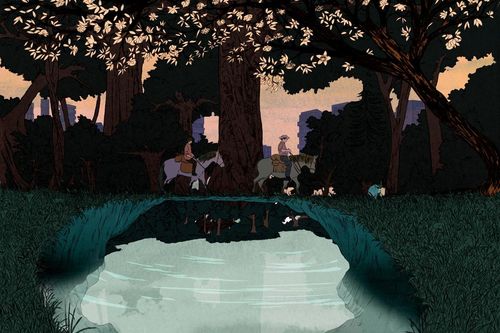
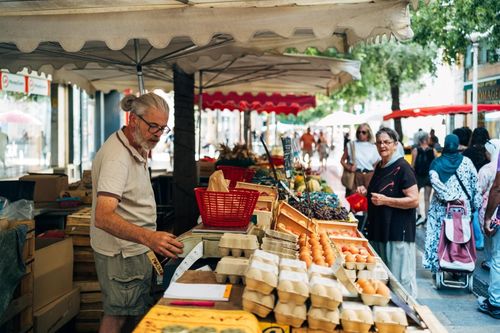
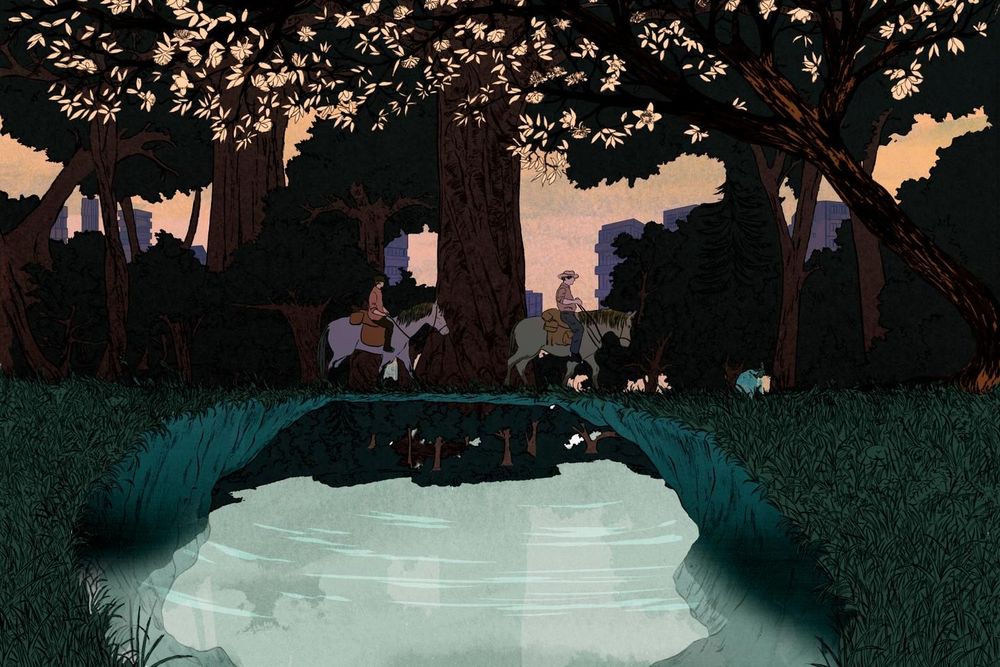
Both men have settled in the countryside with horses, pursuing organic cultivation as a way to align daily life with deeply held beliefs about humanity's place in the natural world. Their individual experiments contribute to a significant national trend: organic farming in France has expanded dramatically, with over 50,000 farms now using organic production methods, generating more than 200,000 jobs, and organic farming's share of total cultivated area reaching 9.5%.
This growth occurs within a supportive policy environment. France launched a national Agroecology Project under former Minister of Agriculture Stéphane Le Foll, designed to provide an ambitious framework for the country's agricultural future. The French government announced nearly €1 billion in additional funding for the agriculture budget in 2024 to support sustainable farming practices, representing a 15% increase over the previous year.
For Stépanoff and Koenig, the physical labor of farming offers more than food production. It represents a philosophical stance, a rejection of screen-dominated existence, and a practical response to what they see as civilization's ecological reckoning. In their gardens, Enlightenment ideals meet contemporary environmental urgency, suggesting that the path forward may require looking backward to older ways of relating to the land.