
In Venezuela, South America's largest lake is dying from oil pollution
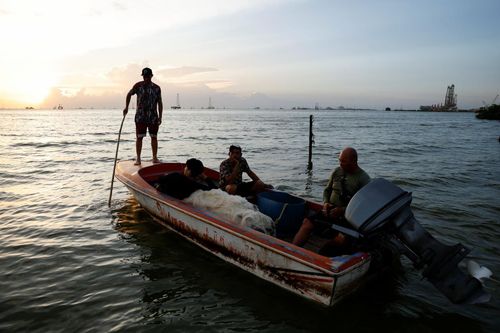
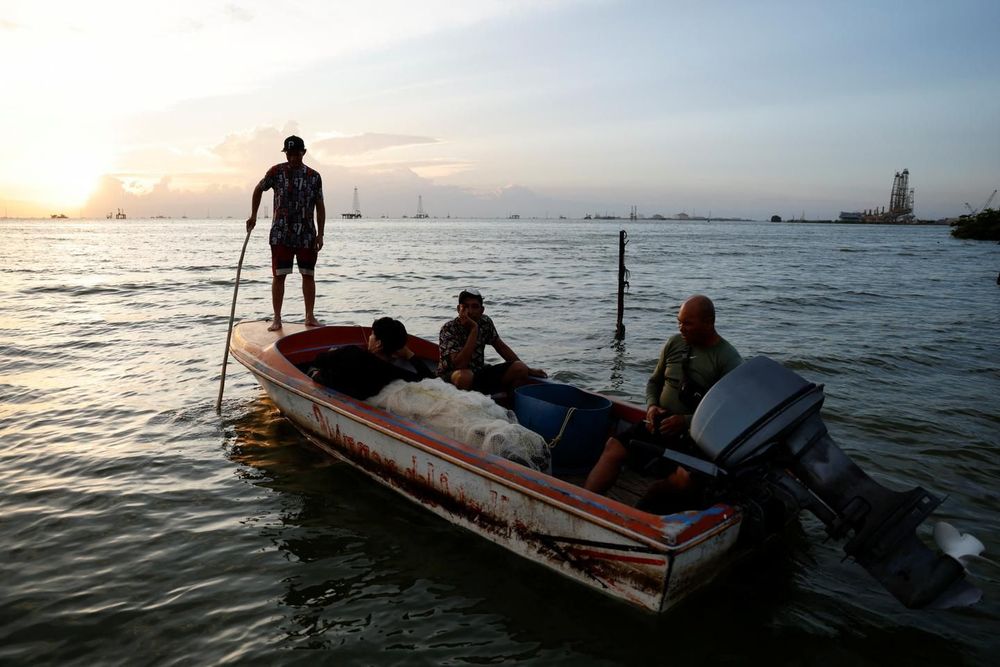
Under a sweltering midday sun at the small port of El Bajo in San Francisco, a town near Venezuela's second-largest city Maracaibo, about a dozen fishers go through familiar routines—mending nets, cleaning canoes, swapping stories in hammocks beneath a rustic shelter patched with dried palm leaves. But the relaxed atmosphere masks a deepening crisis in the waters beyond.
Yordi Vicuña, 37, grimaced as he described the previous night's haul from Lake Maracaibo: just 80 kilograms of shrimp. Two decades ago, when he began fishing these waters, a single night's work could yield 700 to 800 kilograms. The meager catch would barely feed the five-person crew and earn each fisher about $15 for their labor from 5 pm until 5 am the next morning.
"It's because of the pollution, all the filth in the lake," Vicuña explained, gesturing toward the shore where pools of crude oil have turned the ground black.
An ancient ecosystem under assault
Lake Maracaibo, spanning over 13,500 square kilometers and estimated to be approximately 36 million years old, stands as one of Earth's most ancient lakes. This geological treasure now faces an environmental catastrophe rooted in more than a century of industrial exploitation.
Oil drilling formally began here in July 1914 with the opening of the Zumaque I well on the lake's eastern shore. The first productive well followed in 1917, but the transformation accelerated dramatically in 1922 when the Barroso II well at Cabimas experienced a massive blowout, marking the beginning of large-scale oil extraction that would reshape Venezuela's entire economy.
At its peak, more than 450 active wells pumped oil from the lake's surface, propelling Venezuela to become the world's fifth-largest oil producer and transforming what had been a rural fishing economy into an industrial powerhouse. The Maracaibo Basin has produced over 30 billion barrels of oil, with an estimated 44 billion barrels remaining to be extracted, establishing it as one of the world's most significant petroleum regions.
Decades of environmental degradation
The ecological damage began accumulating early. In the early 1930s, authorities excavated a canal at the lake's northern end to accommodate large oil tankers and connect the lake with the Caribbean Sea. The resulting influx of seawater killed numerous freshwater species, marking the first major ecological disruption.
Today, Lake Maracaibo receives wastewater from the Venezuelan states of Zulia, Mérida and Trujillo—home to 5.3 million people—as well as waste from the Colombian department of Norte de Santander. Beneath the surface, tens of thousands of kilometers of underwater oil pipelines deteriorate, with leaks occurring frequently. By 2003, these pipelines, storage tanks and wellheads were already releasing an estimated 1,000 barrels of oil daily into the lake.
The pollution crisis intensified after 2019, when stricter U.S. sanctions made it impossible for Venezuela's state oil company PDVSA to fund essential maintenance of the aging infrastructure.
The science of collapse
Beyond visible oil slicks, the lake faces another threat: toxic cyanobacteria that produce approximately 95 percent of what locals call "verdin"—a greenish, toxic microalgae. This phenomenon results from high concentrations of nitrogen and phosphorus from fertilizers, sewage and industrial chemicals. The verdin can trigger massive fish deaths, compounding the impact of oil contamination on aquatic life.
The fishing industry's decline represents a dramatic reversal of fortune. Historical records from the 1960s show that Venezuela's shrimp fishery in Lake Maracaibo and the Gulf of Venezuela accounted for 98 percent of national shrimp production. However, production dropped drastically in 1966, forcing many processing plants to close. The situation has only deteriorated since then.
For fishers like Vicuña and his crew at El Bajo, these historical and scientific details translate into a daily struggle for survival. Their modest shelter, their mended nets, and their near-empty canoes tell the story of an ecosystem in collapse—a 36-million-year-old lake being poisoned by a century of unchecked industrial activity, leaving those who depend on its waters with an increasingly uncertain future.