
Twelve nations impose sanctions on Israeli settlement products in coordinated action
Twelve Western nations announced coordinated sanctions against products originating from Israeli settlements in the West Bank on Tuesday, September 8, 2026, representing a notable escalation in diplomatic pressure on Israel over its territorial policies.
The United Kingdom, France, Denmark, Spain, Finland, Ireland, Iceland, Norway, Poland, Portugal, Sweden and Canada jointly declared measures targeting settlement-produced goods. The announcement followed months of failed attempts by the 27 European Union member states to agree on collective action, prompting this coalition to act independently outside the EU framework.
British Foreign Secretary leads announcement with strong language
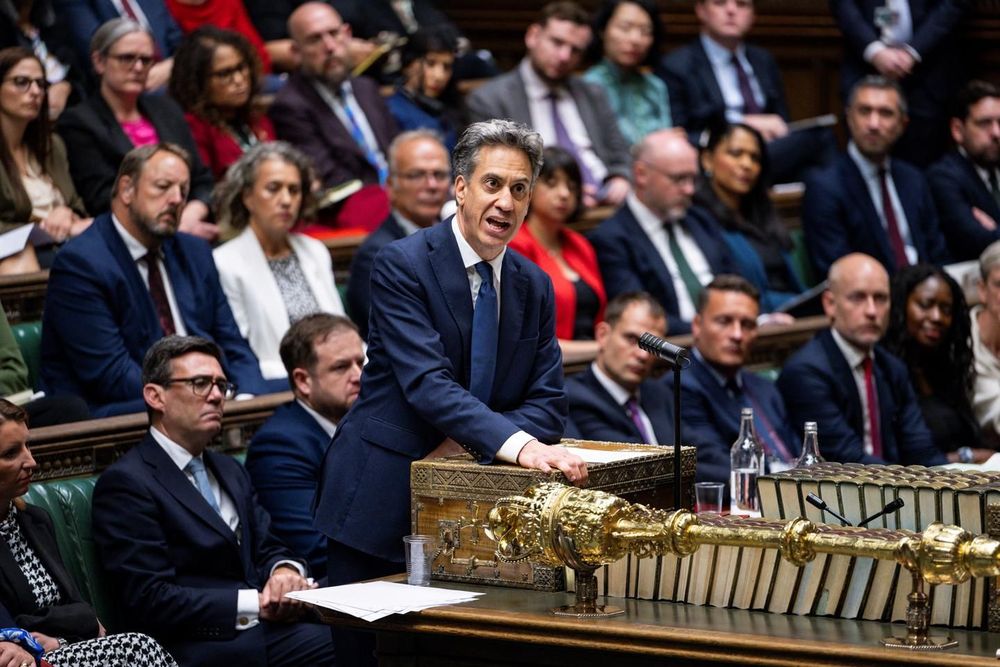
British Foreign Secretary Ed Miliband, appointed to his position on July 20, 2026, led the announcement with unusually direct language. Miliband, whose parents came to Britain as Jewish refugees from the Nazis, described settlement activities using terms including ethnic cleansing, war crimes and violations of international humanitarian law. He also characterized certain settlers as terrorists.
The foreign secretary emphasized his personal connection to Israel through his Jewish heritage and family history, noting that his grandmother settled there after his grandfather died in a Nazi concentration camp. This personal context preceded his sharp criticism of current Israeli policies.
Scope and context of the sanctions
The sanctions target products from settlements located in Area C, which constitutes 60 percent of the West Bank and remains under Israeli administrative control under the Oslo Accords framework. As of 2025-2026, approximately 529,704 settlers live in the West Bank excluding East Jerusalem, with another 246,000 residing in East Jerusalem, bringing the total settler population to over 750,000.
The International Court of Justice ruled in July 2024 that Israeli settlements in the West Bank and East Jerusalem violate international law and that Israel's occupation of Palestinian territories is illegal. This legal determination has provided a foundation for subsequent international actions against settlement activity.
Israel significantly accelerated settlement expansion in 2025, approving 54 new settlements that year. The Israeli government also launched a land registration program for Area C that would allow territory to be declared state land if Palestinian claimants cannot prove private ownership.
Background of European efforts
The coordinated announcement on September 8 follows earlier European efforts to address settlement expansion through more limited measures. In May 2026, the European Union agreed to impose sanctions on three individuals and four organizations involved in settlement activities, after Hungary's change of government ended months of diplomatic blockage. However, EU member states remained unable to reach consensus on broader trade sanctions throughout 2026, with foreign ministers debating options including import licensing systems, prohibitive tariffs and trade bans at meetings in July and September.
The United Kingdom has pursued a phased approach to settlement sanctions over recent months. In June 2026, the government updated official business guidance to advise British companies against engaging in economic activities within settlements. This was followed by individual sanctions in May and June targeting specific settlers and organizations, before the broader trade ban announced in September.
The UK recognized Palestinian statehood in September 2025, with provisional borders covering lands occupied by Israel in the 1967 conflict. This earlier policy shift established groundwork for the current sanctions measures.
Economic impact and implementation
The practical economic impact of the trade sanctions remains limited in scope. UK-Israel bilateral trade totals approximately £6 billion annually, with settlement-produced goods representing only a small fraction of this amount.
Implementation details for the sanctions still require definition by each participating country. Nonetheless, the joint announcement signals a shift from targeting individual violent actors to rejecting the broader settlement enterprise, challenging Israel's long-standing expectation of gradual international acceptance of territorial expansion.