
Strategic stockpile in Western Australia
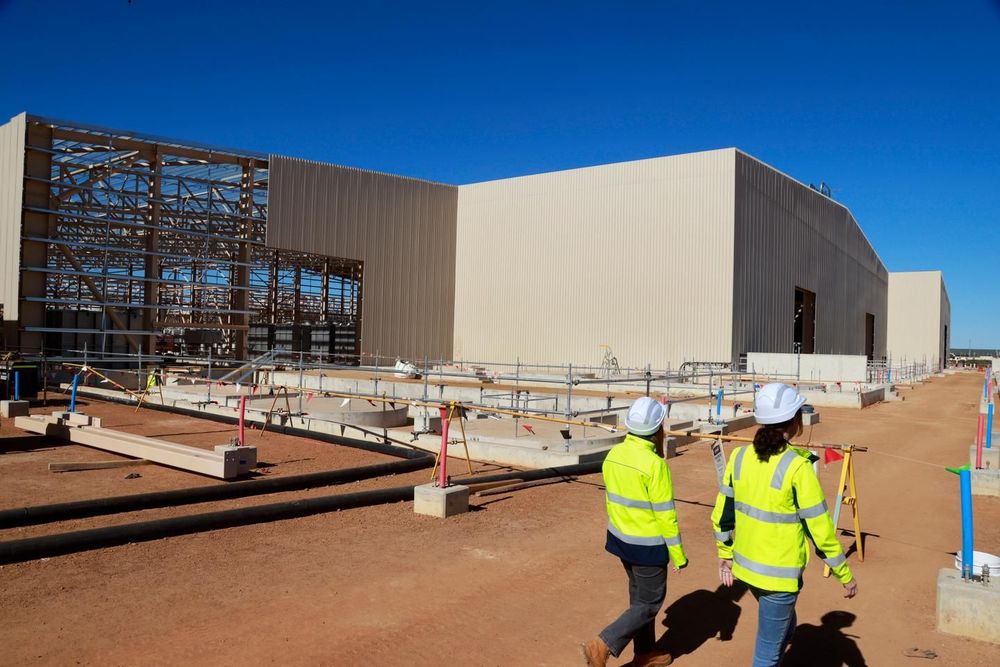
In the remote Geraldton Sandplains of Western Australia, a million metric tons of brown mineral concentrates sit piled at the Iluka Resources industrial complex in Eneabba, 300 kilometers north of Perth. To the casual observer, the stockpile resembles ordinary sand. Yet this accumulated reserve, built up since the 1990s from the company's Narngulu mineral separation plant, represents a strategic asset potentially worth over €500 million in the global race to secure rare earth supply chains.
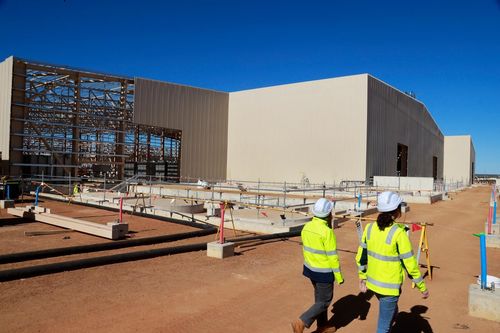
The stockpile forms the foundation of Australia's ambition to become a leading supplier of rare earth elements outside China, which currently dominates approximately 70% of global rare earth mining, 90% of separation and processing, and 93% of magnet manufacturing. Canberra has committed substantial resources to breaking this dependency, with the Eneabba refinery project receiving AUD $1.65 billion in non-recourse loans from the Australian Government's Critical Minerals Facility. The total capital expenditure for the project ranges between AUD $1.7 billion and AUD $1.8 billion.
The priority of the Australian government is to establish new and secure supply chains for critical minerals and rare earths for the purposes of Australia's national security and resilience, but also for our friends and partners in the region and around the world.
Australia's federal minister for resources, Madeleine King, told Le Monde.
Strategic partnership with the United States
The Eneabba initiative fits within a broader strategic framework. In October 2025, Australia and the United States signed an $8.5 billion critical minerals agreement aimed at countering China's market dominance and establishing reliable supply chains between allied nations. This partnership reflects growing concerns about supply security following historical disruptions. During China's 2010-2011 export restrictions, prices for key rare earth elements surged dramatically—neodymium oxide jumped from $8 per kilogram to $80 per kilogram, while dysprosium oxide skyrocketed from $100 per kilogram to $2,500 per kilogram.
Australia's Critical Minerals Strategy, updated in 2023, positions the country as a preferred supplier to allied nations, with government commitments exceeding AUD $4 billion since 2022 to support domestic processing capacity and reduce dependence on foreign supply chains.
Production capacity and economic impact
Once operational, the Eneabba refinery will process 55,000 tonnes of feed material annually to produce 17,500 tonnes of total rare earth oxide per year, with an estimated maximum production capacity of 23,000 tonnes per annum. The facility will employ approximately 300 workers during construction and 270 during operations, providing significant economic benefits to regional Western Australia.
Rare earth elements serve critical functions in modern technology and defense systems. These minerals are essential components in high-performance permanent magnets used in electric vehicle motors, wind turbine generators, and military technologies. Elements such as neodymium, praseodymium, dysprosium, and terbium enable the production of the world's strongest and most reliable magnets, making them indispensable for the clean energy transition and advanced defense systems.
Reshaping the geopolitical landscape
Australia possesses substantial rare earth reserves, with estimates ranging from 5.7 to 13.6 million metric tons depending on recent geological surveys, placing the country among the world's top four reserve holders alongside China, Brazil, and India. The Eneabba refinery represents the first fully integrated rare earth processing facility in Australia and the first project of this scale in the Western world in several decades.
The project signals Canberra's determination to transform the country from a raw materials exporter into a processor of critical minerals, creating jobs while securing supply chains that align with democratic values and strategic interests. As global demand for rare earths continues to rise with the expansion of renewable energy and electric transportation, Australia's move to establish independent processing capacity could reshape the geopolitical landscape of critical mineral supply.