
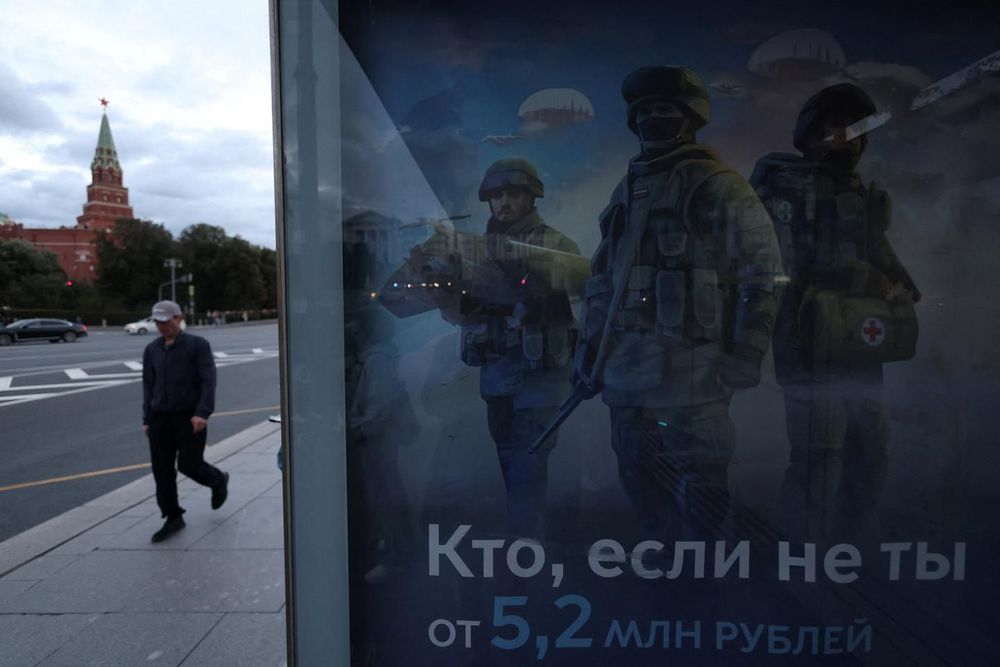
Fears of new military mobilization grip Russia as Duma elections approach
Anxiety is mounting among Russian men of military age as rumors of an impending mobilization wave spread across the country, prompting many to prepare contingency plans for fleeing abroad. The speculation has become so pervasive that President Vladimir Putin felt compelled to address it directly during a visit to Vladivostok on Thursday, September 3.
"As of today, there is no scenario that would require a mobilization," Putin stated, characterizing the rumors as "an informational attack by the enemy ahead of the Duma elections, an attempt to influence the outcome."
The Russian president's reassurances came just days before the State Duma elections scheduled for September 18-20, marking the first Russian parliamentary vote since the full-scale invasion of Ukraine began in February 2022.
Memories of 2022 mobilization fuel current anxiety
Despite these official denials, the threat of renewed conscription has cast a shadow over the electoral campaign. The current climate evokes memories of September 2022, when Putin announced a partial mobilization that officially called up 300,000 reservists according to the Russian Defense Ministry. That decree has never been formally rescinded and technically remains in force, contributing to ongoing uncertainty.
The 2022 mobilization triggered a mass exodus, with estimates suggesting between 600,000 and 900,000 Russians fled the country by the end of that year to avoid conscription. In the immediate aftermath of the announcement, between 300,000 and 500,000 people left within weeks. The scale of the panic was evident at border crossings, where 98,000 Russians crossed into Kazakhstan alone during the first week, creating miles-long traffic jams.
Russians prepare contingency plans
Four years later, many Russian men are taking preemptive measures. Some have already purchased plane tickets, ready to depart after the elections if mobilization is announced.
"There are plans to spend a month in Turkey and wait to see what happens,"explained a journalist in Moscow who requested anonymity. Others are visiting notaries to transfer property ownership to their parents, making it harder for military recruiters to locate them.
"There is real fear of mobilization," confirmed a journalist based in Yekaterinburg in the Urals. "Ordinary citizens do not want to be sent to a war with no end in sight, a war that many, including Putin voters, no longer understand."
Expanded conscription efforts and mounting casualties
These fears are not entirely unfounded. Russia has expanded its conscription efforts significantly since 2022. The upper age limit for mandatory military service was raised from 27 to 30 years effective January 1, 2024, broadening the pool of eligible men. In late 2025, authorities implemented year-round conscription procedures, allowing military commissariats to summon draftees for medical examinations and other procedures at any time, rather than only during the traditional spring and autumn draft periods.
The Russian government decided to conscript 295,000 men in 2025—160,000 in spring and 135,000 in autumn—the highest number in nine years. This intensified recruitment effort comes amid substantial military losses. Western intelligence estimates suggest Russia has suffered approximately 1.4 million battlefield casualties, including as many as 450,000 deaths, since February 2022.
The manpower strain on Russia's military has become increasingly evident. According to Ukrainian President Zelensky in July 2026, Russia enlisted 221,000 people into the military in 2026 while sustaining nearly 225,500 losses, suggesting that recruitment is barely keeping pace with casualties on the battlefield.
Long-term impact of emigration
The lasting impact of the 2022 mobilization is also apparent in emigration patterns. According to estimates from the pro-Kremlin newspaper Izvestia, less than half of those who fled during that period have returned, with only approximately 40% coming back to Russia. This suggests many Russians remain abroad, potentially in anticipation of future call-ups.
As the Duma elections approach, the mobilization rumors have become a political issue in their own right, with Putin's emphatic denials indicating the Kremlin's awareness of the topic's sensitivity among voters. Whether these fears will influence the electoral outcome remains to be seen, but they have already prompted thousands of Russian men to prepare exit strategies, unwilling to take chances with their future.