
African diplomacy scores symbolic UN victories but faces harder challenges ahead, says expert
The African Group at the United Nations achieved two notable diplomatic successes in 2026, securing international recognition of historical injustices while demonstrating a newfound ability to shape global narratives. However, these symbolic victories represent only the beginning of a more challenging journey toward substantive reform of international power structures, according to a leading expert on African security and diplomacy.
On March 25, 2026, coinciding with the International Day of Remembrance of the Victims of Slavery and the Transatlantic Slave Trade, the UN General Assembly adopted a resolution recognizing the transatlantic slave trade as the gravest crime against humanity. The measure passed with 123 votes in favor, though the United States, Israel, and Argentina voted against it, and 52 countries abstained.
Six months later, on September 4, the African Group secured another victory with the "Correct the Map" resolution, which calls for replacing world maps using the Mercator projection with more accurate representations of continental sizes. This resolution garnered even broader support, passing with 164 votes in favor. Only the United States opposed it, dismissing the initiative as part of a "radical ideological project," while Estonia, Georgia, Lithuania, Moldova, Serbia, and Ukraine abstained.
Understanding the cartographic distortion
The Mercator projection, created in 1569 by Flemish cartographer Gerardus Mercator, was designed as a navigation tool for sailors, allowing them to plot courses along straight lines while maintaining a constant compass bearing. While effective for maritime navigation, the projection drastically distorts landmass sizes, particularly those farther from the equator.
On Mercator maps, Greenland appears roughly comparable in size to Africa, when in reality Africa is approximately 14 times larger. This distortion has perpetuated misperceptions about the relative importance and scale of different continents for centuries.
The resolution encourages governments, schools, international organizations, and technology companies to adopt equal-area projections such as the Equal Earth projection when relative size matters. Developed in 2018 by cartographers Tom Patterson, Bernhard Jenny, and Bojan Šavrič, the Equal Earth projection provides a more proportionally accurate representation of the world's continents while maintaining relatively accurate shapes.
The resolution is non-binding and does not ban the Mercator projection or require its abandonment. Instead, it recommends using more accurate alternatives where appropriate. France announced within hours of the resolution's passage that it would drop the Mercator projection from its official representations.
A new diplomatic posture
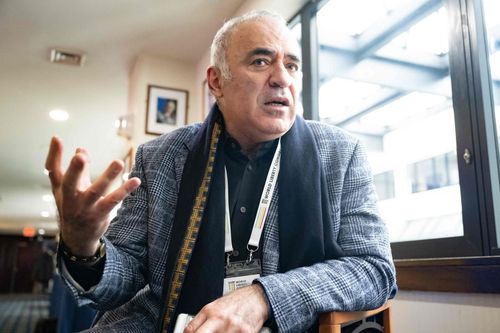
Paul-Simon Handy, East Africa regional director of the Institute for Security Studies, views these resolutions as evidence of Africa's evolving diplomatic capabilities. The Institute for Security Studies, headquartered in Pretoria, South Africa, with offices in Kenya, Ethiopia, and Senegal, is the largest independent research institute in Africa dealing with human security.
"These are two significant diplomatic victories. The African Union, along with Ghana and Togo, which led these initiatives, as well as the African Group at the United Nations, demonstrated an ability to take the lead."
He emphasizes that Africa is no longer simply reacting to proposals from other powers, whether Western, Chinese, or Russian. "Here, Africa identified a problem, put forward a proposal and then built a coalition to support it. In doing so, it compelled other powers to take a position."
Ghana has established a pattern of diplomatic leadership on African issues at the UN. In December 2023, the country spearheaded a Security Council resolution on funding for African Union-led peace support operations, which passed after previous attempts had failed due to opposition from some permanent members.
The limits of symbolic victories
While acknowledging these achievements, Handy cautions against overestimating their significance. The resolutions represent what he calls a "normative victory" that demonstrates Africa's ability to assert a narrative about the past. However, he notes that "these questions remain relatively soft, precisely because they concern the past."
"Things become more complicated when it comes to power and the future. Africa succeeded in correcting the map; it must now be able to reshape international institutions and its own place within the global system by redefining the terms of international taxation, by securing a reform of the United Nations Security Council and by carrying more weight in climate issues."
He characterizes the recent victories as "symbolic" and "even strategic" but emphasizes that they "still largely look to the past." The harder work ahead involves transforming global governance structures that determine economic relationships, security arrangements, and climate policy—areas where entrenched interests and power dynamics pose far greater obstacles than correcting historical narratives.
Handy advocates for what he calls a "memory of responsibility," which urges African countries to reclaim control over the narrative of their past while not exempting them from acknowledging their responsibilities in addressing current political and economic challenges. This approach recognizes that correcting historical injustices and contemporary inequalities requires both symbolic recognition and substantive institutional reform—with the latter representing the more formidable task ahead.