
Lebanese archivist races to preserve memory as Israeli demolitions reshape southern Lebanon
When Adeeb Farhat unwrapped his latest delivery—two small landscape paintings from southern Lebanon and vintage magazines—the young film producer knew he was engaged in a desperate endeavor. His Beirut office, stacked with boxes of old newspapers and historical materials, has become a repository for a region under siege. The demolitions carried out by Israeli forces in the partly occupied south, he explained, have ignited what he calls "a race between preserving memory and destruction."
Farhat's passion for archiving southern Lebanon runs deep, but the current conflict has added unprecedented urgency to his work. He had to evacuate some of his collection from Arab Salim, the southern Lebanese town where he lived before war erupted on March 2, 2026, when Hezbollah launched projectiles toward a missile defense site near Haifa—the first such attack since a November 2024 ceasefire. What followed was a devastating military campaign that has left roughly 20 percent of Lebanese territory under Israeli control and displaced over one million people.
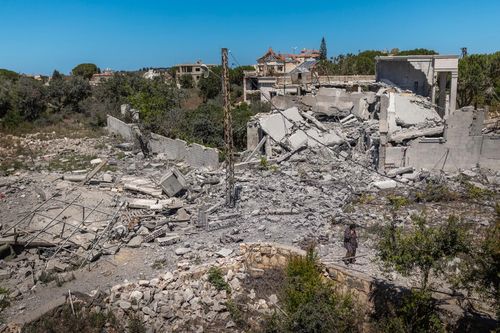
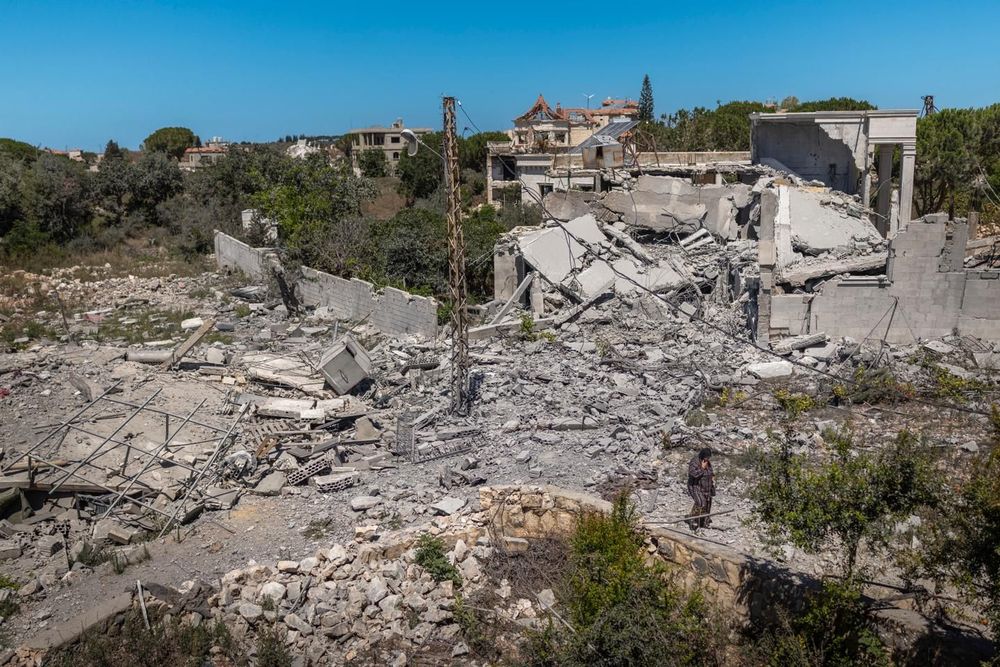
The Israeli army initiated ground operations on March 16, eventually deploying five divisions across southern Lebanon. Though an initial ceasefire was agreed on April 16, high-intensity fighting continued until June 20. Even after that partial cessation of hostilities, Israeli forces have continued detonating homes in the occupied zone and conducting airstrikes in surrounding areas. More than 20 border villages have been razed since the April truce, with Israeli Defense Minister Israel Katz reporting in March that 24 Shiite villages had been destroyed, demolishing between 15,000 and 20,000 homes.
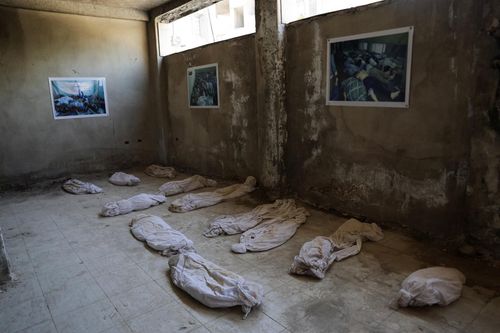
The human cost has been staggering. As of June 22, at least 4,175 Lebanese citizens had been killed since hostilities began, according to Lebanese government data cited by the UN Office for Coordination of Humanitarian Affairs. Against this backdrop of destruction, Farhat scours for anything connected to the region's history and the latest conflict: photographs, objects, books, oral testimonies. Everything holds value in his mission to document a disappearing world.
Layers of occupation and conflict
The artifacts Farhat collects tell the story of a region shaped by recurring warfare. Among his most poignant items are bilingual Hebrew-Arabic passes from Israel's previous occupation of southern Lebanon, which lasted from 1982 to 2000. During that period, Israel worked with the South Lebanon Army, a Lebanese Christian-dominated paramilitary organization founded in 1977 that administered the occupied zone on Israel's behalf. Residents and militia members had to show these passes to move through checkpoints.
Southern Lebanon has endured decades of conflicts linked to Israel, predating even the emergence of Hezbollah in the 1980s during the Israeli occupation. The current war marks the fourth extensive period of conflict between Israel and the Iran-backed Shiite armed movement, following major confrontations during the 1982-2000 occupation, in 2006, and in 2023-2024.
The scale of current demolitions has drawn international attention. Human Rights Watch and UN experts have stated that Israel's mass demolitions of Lebanese border villages could constitute wanton destruction, a war crime under international law. The laws of war prohibit deliberate destruction of civilian homes except when necessary for lawful military reasons.
For Farhat, every day brings a new urgency. The Israeli army continues its operations in the occupied zone, erasing not just buildings but entire communities and their histories. His archive represents more than historical preservation—it is an act of resistance against the obliteration of collective memory, a determination that the stories of southern Lebanon and its people will not be buried beneath the rubble.