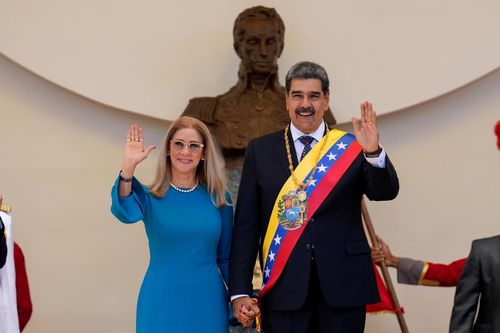

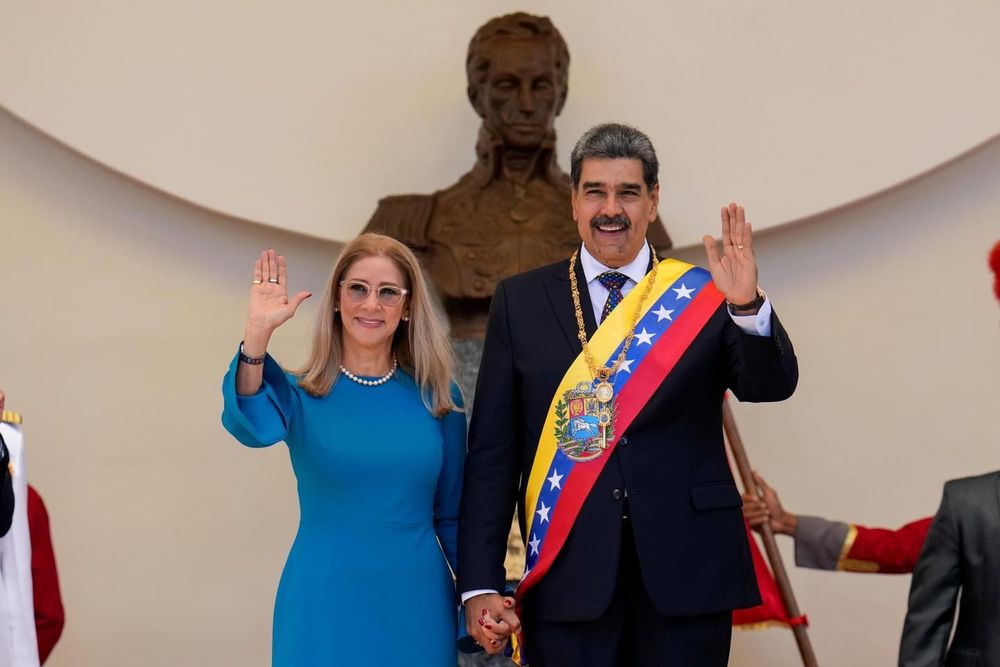
Wife of deposed Venezuelan leader Maduro seeks house arrest, citing heart condition
Cilia Flores, the wife of deposed Venezuelan leader Nicolas Maduro, has filed a request to be released from federal detention in New York and placed under house arrest, citing serious heart problems that require immediate medical attention. The 69-year-old former first lady is currently held at the Metropolitan Detention Center in Brooklyn alongside her husband while both await trial on drug trafficking charges.
According to a court document filed Wednesday, September 10, by her attorney Mark Donnelly, Flores was in good health before her capture by US forces in January and was not taking any long-term medication except for a monthly injection. However, since her detention, she has developed serious cardiac complications that require a coronary angiogram or potentially surgery, her defense team stated.
The defense argues that the conditions at the federal jail prevent Flores from receiving adequate medical care. Her attorney is requesting house arrest under restrictive conditions, including 24-hour armed surveillance, electronic ankle bracelet monitoring, and confiscation of her passport.
Capture and charges
Flores and Maduro were seized during a US military operation in Caracas on January 3, 2026. The operation, code-named Operation Absolute Resolve, involved more than 150 aircraft launched from 20 bases across the Western Hemisphere and lasted less than 30 minutes. Both have been in US custody since their capture.
The couple faces multiple charges including cocaine importation conspiracy, possession of machine guns and destructive devices, and conspiracy to possess machine guns and destructive devices. Maduro also faces an additional charge of narco-terrorism conspiracy. The indictment against Maduro dates back to March 2020, when the US Justice Department first charged him during the first Trump administration, alleging he helped lead the Cartel de los Soles to flood the United States with cocaine.
According to the indictment, Flores allegedly brokered a 2007 meeting between a large-scale drug trafficker and Nestor Reverol Torres, the director of Venezuela's National Anti-Drug Office, and allegedly accepted hundreds of thousands of dollars in bribes to facilitate cocaine shipments at $100,000 per flight.
Political background
Flores is not merely a presidential spouse but a significant political figure in her own right. She first rose to prominence as Hugo Chávez's defense lawyer after his failed 1992 coup attempt, helping secure his release from prison in 1994. She later served as president of Venezuela's National Assembly from 2006 to 2011, becoming the first woman to preside over the Venezuelan parliament, and held the position of Attorney General from 2012 to 2013.
Legal proceedings
Both Maduro and Flores have filed motions to dismiss the charges, with Maduro claiming head-of-state immunity and Flores arguing she shares that immunity as the spouse of a head of state. The court has scheduled oral arguments on the defense motions for November 17. Their trial is scheduled to begin on June 1, 2027.
The 63-year-old Maduro has claimed in court to be a
prisoner of warof the United States. Both deny all charges against them.
The US reward for Maduro's capture escalated significantly over time, starting at $15 million in 2020, increasing to $25 million in January 2025, and finally doubling to $50 million in August 2025, reflecting the intensifying pressure on the Venezuelan leader before his eventual capture.
This is not the first time Flores's family has faced drug trafficking allegations in the United States. Two of her nephews, Franqui Flores de Freitas and Efrain Campo Flores, were arrested in Haiti in November 2015 by the DEA on charges of conspiring to traffic 800 kilograms of cocaine into the United States.