
EPA repeals rules that limit planet-warming greenhouse gas emissions from power plants
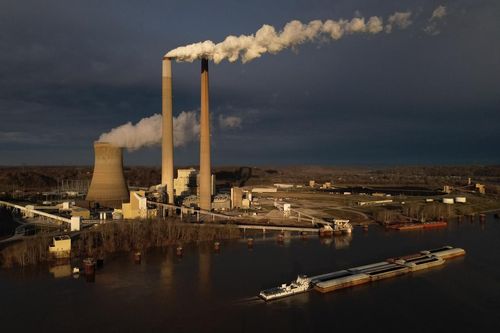
The Environmental Protection Agency announced Monday, September 14, that it is repealing rules limiting planet-warming greenhouse gas emissions from power plants fueled by coal and natural gas. The agency also took a separate step to prevent future administrations from regulating climate pollution from power plants.
The rule change, first proposed last year, represents a fundamental shift from efforts by Democratic Presidents Joe Biden and Barack Obama to address climate change and regulate carbon dioxide and other greenhouse gases that trap the sun's heat. Environmental groups decried the change, saying it would come at a cost to Americans' health and further degrade the environment.
The Biden administration's 2024 power plant rule had required existing coal-fired power plants to reduce their emissions by 90% by 2032 and forced new natural gas plants to offset most of their emissions using carbon capture technology. Revoking that rule would save industry more than $310 billion in costs and help "unleash" American energy, according to the EPA. An accompanying proposal to eliminate all remaining greenhouse gas emissions standards would save an additional $370 million in direct compliance costs if finalized.
EPA Assistant Administrator Aaron Szabo said the change will allow utilities to "make the best decision for the ratepayers based on cost and cost savings, instead of being required to shut down facilities."
Legal challenges expected
The power plant rule, set to take effect soon after publication in the Federal Register, is expected to face immediate legal challenges. Environmental groups are also likely to challenge the separate rule proposed Monday that could prevent future administrations from regulating greenhouse gas emissions from power plants.
The proposal, expected to be made final next year, follows the EPA's action earlier this year revoking a scientific finding that long served as the central basis for US action to regulate greenhouse gas emissions and fight climate change. On February 18, 2026, the EPA rescinded the 2009 Endangerment Finding, which had determined that six greenhouse gases—carbon dioxide, methane, nitrous oxide, hydrofluorocarbons, perfluorocarbons, and sulfur hexafluoride—threaten public health and welfare. That finding had served as the legal foundation for regulating greenhouse gas emissions under the Clean Air Act.
The February action eliminated all greenhouse gas emissions standards for cars and trucks. The new plan would apply similar logic to a broader undoing of climate regulations on stationary sources such as power plants.
Announcement amid G20 energy meeting
The announcements came as EPA chief Lee Zeldin, Interior Secretary Doug Burgum and Energy Secretary Chris Wright hosted a G20 ministerial meeting on "energy abundance" in Houston. Zeldin, a Republican and former New York congressman, was confirmed as EPA Administrator on January 29, 2025, by a Senate vote of 56-42, with three Democrats joining all 53 Republicans in support.
The announcement's timing is both a nod to the important role oil-rich Texas plays in the energy industry and a potential snub of European and other international allies in attendance who have pursued environmentally-friendly policies that the Trump administration has moved to undo.
Republican President Donald Trump called climate change "the greatest con job ever perpetrated on the world" at a speech to the United Nations last year, and his administration withdrew the US—for the second time—from the 2015 Paris climate accord that sets voluntary goals to curb planet-warming emissions. Trump has boasted of US energy abundance even as the Iran war continues to disrupt global fuel markets and gas prices top $4.31 a gallon, up more than a dollar from a year ago.
Industry support, environmental opposition
Coal-fired power plants would have been forced to capture smokestack emissions or shut down under the strict EPA rule issued in 2024. Those rules are now being upended. The coal industry and groups representing coal-fired power plants have denounced the Biden rule as "overreach" by the EPA and urged its repeal.
Michelle Bloodworth, CEO of America's Power, a trade organization for the US coal fleet, said lifting the rule "will protect grid reliability and shield electricity consumers from higher costs at a time of surging demand from data centers, artificial intelligence and advanced manufacturing."
Zeldin said Monday that the Trump administration "has come in to protect American energy and to make sure you can afford to keep the lights on." He argued that Biden-era actions were designed to "suffocate our economy in order to protect the environment," with the intent to regulate the coal industry "out of existence" and make it "disappear."
However, coal's role in U.S. electricity generation has been declining for years, generating approximately 15-16% of U.S. electricity in 2024-2025, down from 39% in 2014 and a peak of 51% in 2001. The United States is on track to have closed half of its coal-fired generation capacity by the end of 2026, compared to the peak capacity reached in 2011. In 2024, only 4 GW of coal capacity was actually retired, representing the least amount of coal retirements since 2008, after the U.S. Department of Energy issued emergency orders that temporarily postponed the retirement of large coal plants.
Former Vice President Al Gore said the EPA's action moves the US "in the exact opposite direction of the rest of the world. With ongoing disruption in global energy markets, the clear answer to rising costs and energy security is clean energy." Even as the Trump administration "is dragging the US backwards," the transition to clean energy "will continue to take hold both in the US and globally," Gore said Monday. "That's because clean energy is cheaper, creates more jobs and bolsters energy security."
Health and environmental concerns
Coal, gas and oil-fired power plants are responsible for about one-quarter of the nation's total climate pollution, second only to the transportation sector. Pollution from power plants is one of the largest sources of climate-changing pollution in the world.
U.S. power sector carbon dioxide emissions rose 4% in 2025, increasing by 58 million metric tons, with coal-fired generation jumping 13% and adding 78 million metric tons of CO2, driven by increased electricity demand from data centers, manufacturing facilities, and hot summer weather.
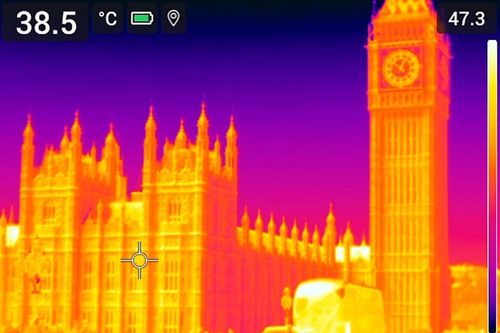
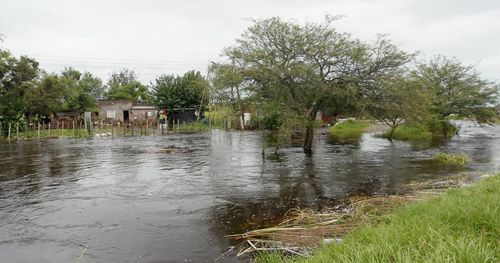
Environmental and public health groups called the new rollbacks dangerous and vowed to challenge the rules in court. "Tearing down our national protections against climate pollution from power plants will have enormous costs for the health, safety and well-being of families across the country," said Vickie Patton, general counsel for the Environmental Defense Fund. "Americans everywhere are already suffering from record-breaking heat, more dangerous floods and storms, and skyrocketing insurance costs."
Patton said the EPA has a legal responsibility to protect the public from harmful pollution, adding that "clean, affordable and reliable technologies are widely available to power our homes and businesses."
The power plant rule is among nearly three dozen environmental regulations that Zeldin targeted in early 2025 when he announced what he called the "most consequential day of deregulation in American history."
In its proposal last year, the Trump EPA argued that carbon dioxide and other greenhouse gases from fossil fuel-fired power plants "do not contribute significantly to dangerous pollution" or climate change and therefore do not meet a threshold under the Clean Air Act for regulatory action. The agency cited the Supreme Court's 2022 decision in West Virginia v. EPA, which struck down the Obama-era Clean Power Plan and ruled that EPA could not use the Clean Air Act to manipulate Americans' energy choices through what the court called the "major questions doctrine."