
Ulaanbaatar's youth navigate identity between steppes and city as rural exodus reshapes Mongolia's capital
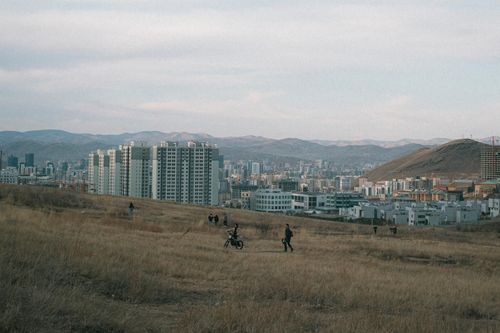
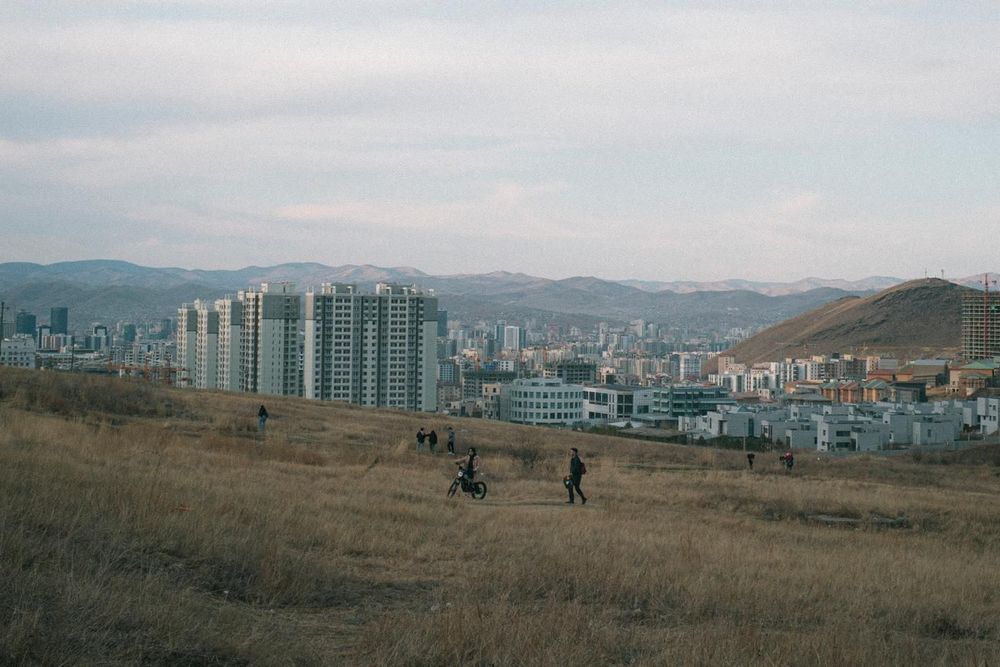
Ulaanbaatar, Mongolia's rapidly expanding capital, now houses one in two Mongolians as climate disruption and economic pressures continue to empty the country's legendary steppes. As the city hosts the 17th United Nations Convention to Combat Desertification from August 17-28, 2026, under the theme 'Restoring Land. Restoring Hope,' photographer Odhran Dunne presents intimate portraits of the capital's youth caught between two worlds.
The transformation has been dramatic. Between 1990 and 2019, over 663,100 people migrated from rural areas to Ulaanbaatar, representing 45.2 percent of the capital's total population by 2019. The peak migration period came between 2000 and 2009, when approximately 314,500 people moved to the city. Mongolia's overall urbanization rate surged from 57 percent in 2000 to 68 percent by 2010, with 1,798,100 people living in urban areas.
This exodus accelerated following a 1992 law that entitled every Mongolian citizen to 0.7 hectares of land within a city for free, enacted as the country transitioned to a market economy. But the real driver has been environmental catastrophe. Research shows migration intensity increases sharply following droughts and dzuds, the Mongolian term for devastating winters that can obliterate entire herds.
Climate extremes driving displacement
The scale of livestock losses has been staggering. During the 2009-2010 dzud, approximately 20 percent of Mongolia's livestock population perished, affecting 769,000 people—28 percent of the national population at the time. Combined with the 2000-2002 period, these climate extremes killed around 20 million animals. More recently, the 2023-2024 winter brought one of the harshest dzuds in nearly 50 years, with 9.12 million animals dying as temperatures plunged to minus 30 degrees Celsius or lower amid the heaviest snowfall in five decades.
Climate change is intensifying these disasters. The United Nations reports that Mongolia has experienced six dzuds in the past decade alone, including the 2022-23 winter when 4.4 million livestock perished. According to the UN Convention to Combat Desertification, nearly 77 percent of Mongolia's territory now suffers from land degradation. Average temperatures have risen by more than 2 degrees Celsius since the 1940s—twice the global average—while rainfall has declined, droughts have become more frequent, and sand and dust storm days have more than tripled over the past six decades.
For centuries, pastoralism sustained Mongolian culture across the vast steppes. While once blamed for land degradation, scientific studies now largely recognize traditional herding's benefits for preserving the territory. Yet the arid steppes continue to empty as nomads, stripped of their livelihoods by climate extremes and lacking resources, settle on Ulaanbaatar's outskirts in ger districts, where traditional yurts crowd together.
Urban planning crisis and pollution
The rapid influx has created enormous urban planning challenges. An estimated 60 percent of Ulaanbaatar's residents now live in ger districts, where coal-burning stoves provide the only heating during brutal winters. According to the World Health Organization, 80 percent of the city's winter air pollution originates from these districts. IQAir monitoring shows Ulaanbaatar's 2024 average PM2.5 concentration reached 25.7 micrograms per cubic meter—5.1 times the WHO annual guideline—ranking it among the world's most polluted cities.
Pollution worsens dramatically during colder months from October through March when households rely heavily on coal-burning stoves, while geographical conditions including temperature inversions trap pollutants close to the ground. The city's heavy dependence on coal has created a public health crisis layered atop the migration challenge.
A generation between two identities
When photographer Odhran Dunne first visited Mongolia in 2023, he felt the stark divide between the country's rural, mythical identity—the endless steppes and the legacy of Genghis Khan—and Ulaanbaatar's urban, developed, globalized reality. Supported by the Allier departmental council, he returned in 2025 with a focused mission: to explore how the 18-to-35 generation navigates this split.
This cohort represents the first to grow up straddling both worlds—the city and the countryside—inheriting both nomadic traditions and urban aspirations. Through his lens, Dunne sought to understand how these young Mongolians reconcile their pastoral heritage with the concrete reality of life in a rapidly changing capital, capturing their hopes, struggles, and memories of the steppes they or their parents left behind.
As COP17 brings together delegates from 197 countries to address desertification, land degradation and drought challenges, Ulaanbaatar itself embodies the human cost of environmental crisis. The young faces in Dunne's photographs tell the story of a nation in transition, where climate change has redrawn the map of identity itself, forcing a generation to forge new meanings of home between the memory of open horizons and the crowded reality of urban survival.