
French government sells historic Toulouse mansion to address budget pressures
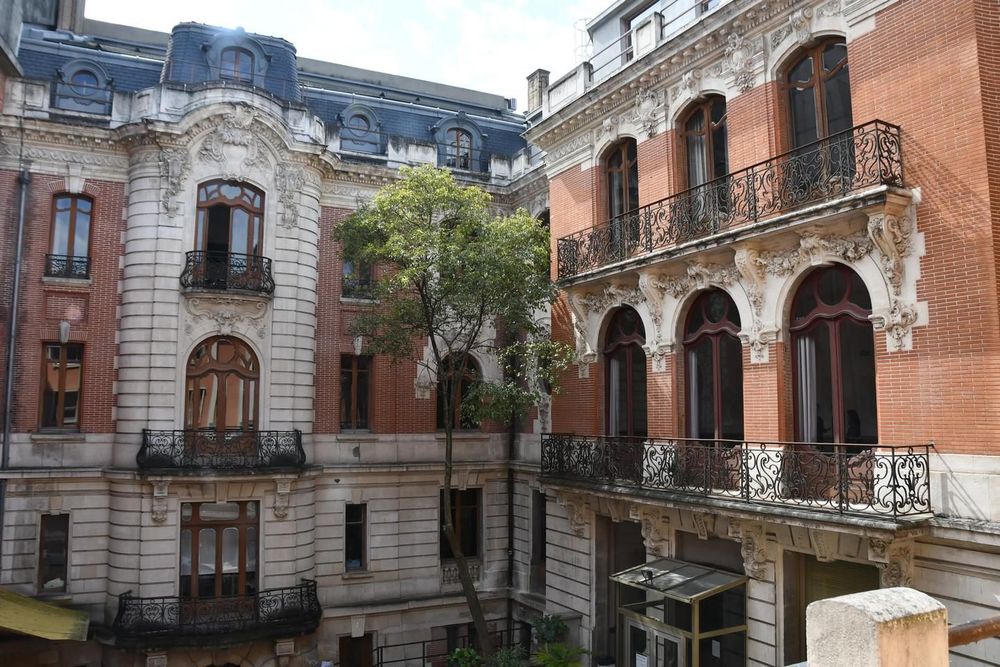
The French government has put the Georges Pauilhac mansion, a historic Art Nouveau building in central Toulouse, up for online auction from November 24 to 26. The property, which has been in state ownership for 70 years, carries a starting price of €2.1 million and is available for virtual tours ahead of the sale.
The decision reflects France's efforts to generate revenue amid significant fiscal pressures. The country faces a projected budget deficit of €124.4 billion for 2026, targeting a reduction to 4.7-5.0% of GDP from an expected 5.4% in 2025. By the end of June 2026, the deficit had already reached approximately €106.8 billion, marking an increase from €100.4 billion at mid-2025.
Located on Rue Roquelaine in the heart of Toulouse, the mansion was built around 1898 by architect Barthélemy Guitard for Georges Pauilhac, a member of the Pauilhac family involved in the JOB cigarette paper business. The building received historic monument status by decree on December 10, 2025, just days before the auction announcement.
Vast but costly portfolio
The sale illustrates the challenges facing the French government as a property owner. The state has accumulated 195,284 buildings and 31,081 plots of land over centuries. At the end of 2024, the French state and its public institutions occupied approximately 96.7 million square meters of buildings, including more than 23 million square meters of office space. This makes France the largest public property owner in Europe.
However, this vast portfolio has become increasingly difficult to maintain and update, particularly with the need for climate adaptation. In 2018, French state property assets were valued at approximately €65 billion, but many properties are now oversized for current needs and expensive to maintain.
The mansion being auctioned came into state ownership in 1956, when the University of Toulouse acquired it to house the Centre Régional de Documentation Pédagogique (Regional Center for Educational Documentation). The property had been sold once before in 1946.
Long-standing disposal strategy
Asset sales have been a consistent feature of French government policy for nearly two decades. Since 2006, state-owned real estate sales have yielded between €200 and €500 million annually. The pace accelerated significantly from 2007 following debt restructuring initiated by President Nicolas Sarkozy, with approximately €590 million earned from sales in a single year during that period.
Properties that were easiest to sell were largely divested during the presidencies of Jacques Chirac (1995-2007) and Nicolas Sarkozy (2007-2012). The remaining assets are more challenging to dispose of, even as the need for revenue has intensified.
Historically, the proceeds from government property sales have been allocated primarily to public infrastructure rather than debt reduction. According to previous government asset sales programs, over 85% of gains were used to renovate or construct public buildings, with only the remaining 15% going to reducing state debt.
The Toulouse mansion sale represents a continuation of this strategy, with the government seeking to extract value from underutilized assets in its extensive portfolio.