
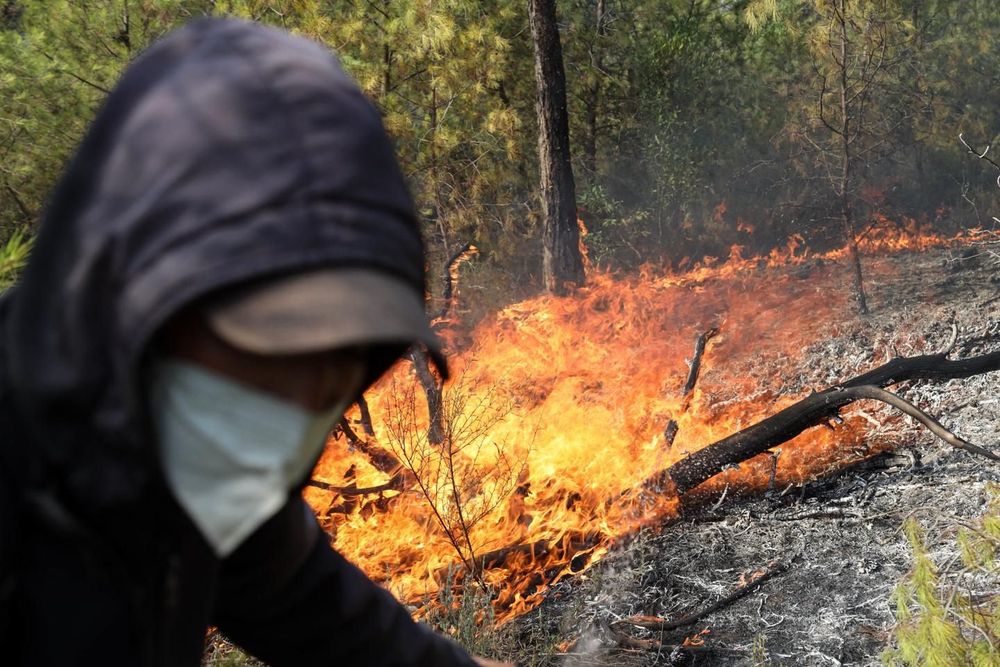
Algeria forest fires claim 12 lives as blazes rage across northeastern provinces
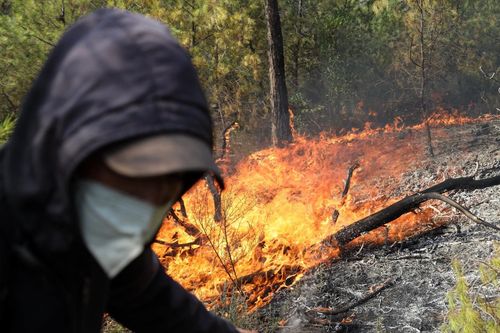
Forest fires tore through northeastern Algeria on Wednesday, claiming at least 12 lives and leaving 54 people hospitalized with burns as authorities mobilized emergency resources to combat dozens of active blazes fueled by strong winds.
Interior Minister Said Sayoud confirmed the death toll, with five people killed in Jijel province, four in Bejaia and three in Tizi Ouzou province. Among the victims were an eight-year-old boy and a 22-year-old woman in Bejaia, according to local radio reports. Six burn victims remain in serious condition at a Bejaia hospital.
The fires struck the coastal provinces approximately 300 kilometers from the capital Algiers, prompting widespread evacuations. Civil protection authorities reported battling 69 separate fires as of 8:00 pm local time Wednesday. The conflagrations forced the closure of three major national highways connecting eastern regions near Bejaia, Jijel and Setif.
Bejaia Province, home to approximately 984,000 people in the Kabylie region along Algeria's Mediterranean coast, bore the brunt of the devastation. Images from Jijel showed panicked residents seeking refuge in a post office as thick smoke engulfed surrounding areas.
Government response and evacuations
Minister Sayoud and Health Minister Mohamed Seddik Ait Messaoudene traveled to Bejaia to assess firefighting operations and evaluate the condition of injured residents. The civil protection agency deployed significant resources to combat the blazes, which intensified due to powerful winds sweeping the region.
Many residents in affected areas were evacuated to safety as flames threatened homes and infrastructure across multiple provinces.
Recurring summer tragedy
Forest fires occur regularly in northern Algeria during summer months, but the increasing frequency and severity of these disasters reflects a deepening crisis. The region has experienced temperature rises of 1.5 to 2°C over the twentieth century—more than double the global average of 0.74°C—making it particularly vulnerable to extreme fire conditions.
Algeria's wildfire problem has intensified dramatically in recent years. From 2010 to 2019, the country recorded approximately 3,000 fire outbreaks annually, burning nearly 310 square kilometers each year, according to Algeria's General Directorate of Forests. Climate projections indicate the Maghreb region will experience fire seasons extending by an additional month annually through 2030-2060.
July 2023 marked a particularly devastating chapter when fires killed more than 30 people, destroyed thousands of hectares of forests and farmland, and damaged hundreds of homes around Bejaia. That disaster affected approximately 30,000 people and resulted in more than 700 injuries, devastating 6,000 families who relied on crops and livestock.
The 2021 fire season remains the deadliest in decades, with 90 people killed, mostly in the Kabylia region. With only 0.67 to 0.82 percent of Algeria's land area covered by natural forest—approximately 1.5 million hectares—each fire represents a significant environmental loss for the country.
Arson investigations and legal consequences
Authorities frequently investigate suspected arson following major fire outbreaks. Four individuals in Constantine province currently face pre-trial detention in connection with July fires. In January 2024, Algeria enacted legislation imposing life imprisonment on those convicted of deliberately starting forest fires, reflecting the government's determination to combat intentional fire-setting.
This year authorities recorded nearly 2,000 fires nationwide in July alone. In late July, more than 100 residents temporarily fled their homes in Annaba as fires swept through the northeastern province, damaging nearly 150 residences.