
Elderly South Korean women denied education by patriarchal tradition finally learn to read
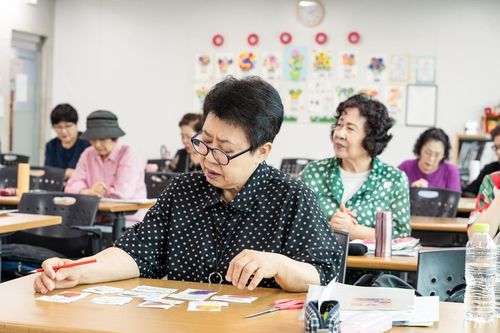
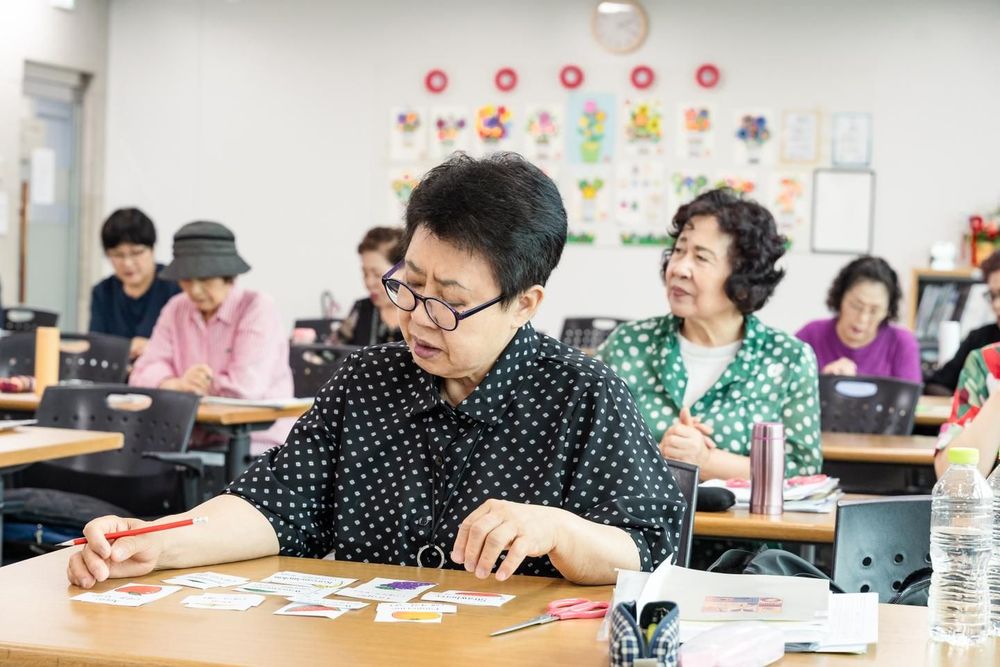
At the Mapo literacy center in Seoul, each class opens with a brief dictation exercise. The instructor marks incorrect letters, but students have reframed these corrections with a gentle phrase: 'The cherry blossoms have bloomed.' For women like Yoo Gyeong-sun, now 72, this represents far more than a writing lesson—it symbolizes opportunities denied for seven decades.
Yoo was born in 1952 during the Korean War in Gangwon Province. She was the only child among six siblings who never attended school, despite her family's financial stability. Her father refused to educate her based on a single conviction: girls belonged at home, while the eldest daughter should care for her brothers and sisters. In 2025, encouraged by her daughter, Yoo finally enrolled in elementary-level courses at the literacy center.
Her story echoes across a generation. A 2008 nationwide survey revealed that 1.7% of South Koreans—approximately 620,000 people—were completely illiterate. The gender disparity was stark: 2.7% of women could not read or write, compared to just 0.5% of men. Among those in their seventies, the gap widened dramatically, with 28.6% of women illiterate versus only 9.1% of men.
Lee Jeong-yeon, now 85, experienced similar exclusion. Born in 1941 on Geoje Island during the final years of Japanese colonial rule, she lived through wartime famine while her mother insisted she work in the fields rather than pursue education. Her two older brothers attended school—one reaching middle school, the other high school. Lee watched them carry their schoolbags with envy while she remained behind, her mother insisting that girls did not need diplomas to earn money.
Confucian values and legal subordination
The systematic denial of education to women like Yoo and Lee was rooted in Confucian tradition, which prescribed 'three obediences' for women: submission to fathers in youth, to husbands in marriage, and to eldest sons in widowhood. This principle established a rigid gendered hierarchy within Korean families, where the eldest male occupied the position of ultimate authority.
These cultural values were reinforced by law through the hojuje system, which officially designated men as family heads while subjecting women to what the article describes as triple male authority throughout their lives. The Constitutional Court ruled this system unconstitutional in 2005, and it was formally abolished on January 1, 2008, replaced by the Family Relations Register system based on individual registration rather than male household headship.
The educational barriers faced by this generation occurred against a backdrop of dramatic national transformation. When Korea gained independence from Japanese colonial rule in 1945, the literacy rate stood at approximately 22%. During the Korean War that followed, about 40% of school buildings were destroyed. Despite this devastation, teachers held classes outdoors on hillsides and riverbanks without textbooks or writing materials. By 1960, elementary school enrollment had reached 90%. The literacy rate climbed to 87.6% by 1970 and approached 98% by 2008.
Yet this rapid progress left behind those who had been excluded in their youth. While younger generations benefited from expanding educational opportunities, elderly women remained locked out by the patriarchal structures of their formative years.
A network of second chances
Today, literacy programs like the Mapo center address this legacy. These initiatives primarily serve elderly women, along with foreign laborers and marriage immigrants. The programs are typically operated by civilian organizations with government financial support, creating a partnership model that has expanded access across the country.
The challenge extends beyond complete illiteracy. A 2023 OECD Survey of Adult Skills found that approximately 31% of Korean adults aged 16-65 scored at or below Level 1 in literacy proficiency, indicating low functional literacy. The survey revealed significant generational gaps, with older adults demonstrating substantially lower proficiency than younger cohorts.
In some rural areas, elementary schools facing declining enrollment due to low birth rates and urban migration have opened their doors to elderly women students. These 'granny schools' serve a dual purpose: keeping institutions operational while providing educational opportunities to a demographic that was systematically denied them.
For Yoo Gyeong-sun and Lee Jeong-yeon, the literacy center represents a victory over decades of exclusion. Their presence in classrooms—alongside hundreds of thousands of other elderly Korean women—reflects both a painful historical reality and an ongoing effort to address the educational inequities rooted in patriarchal tradition. At 72 and 85 respectively, they are finally claiming the education their brothers received as a birthright, transforming cherry blossoms from euphemisms for errors into symbols of late-blooming possibility.