
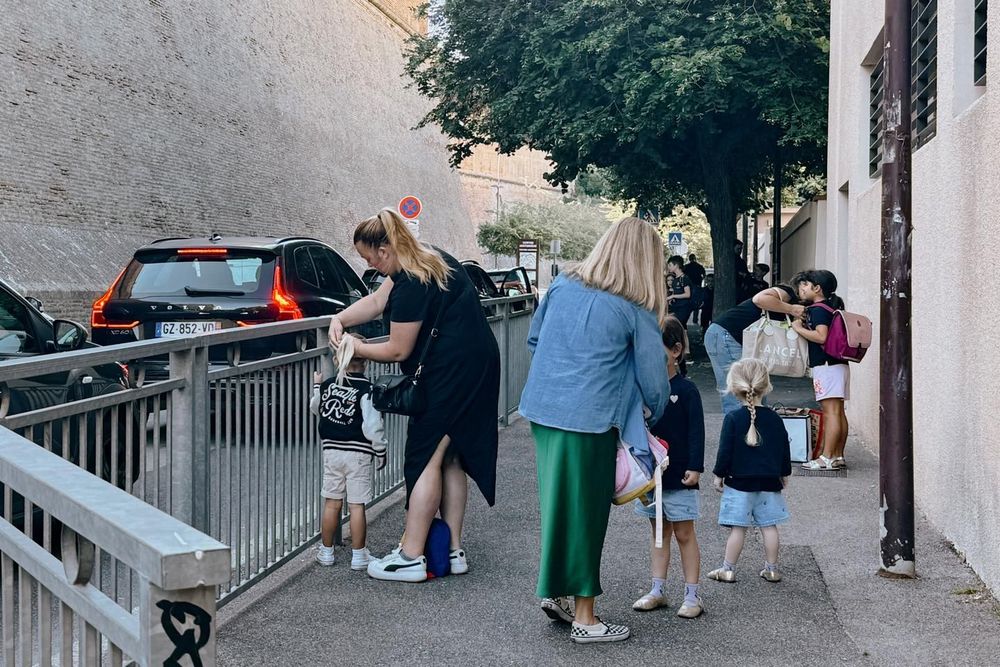
A tale of two schools, 100 meters apart
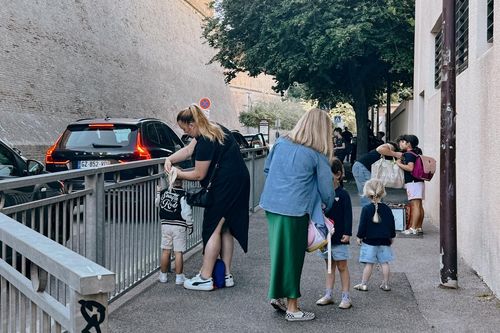
Every morning after 8:30, a line of cars stretches dozens of meters along the medieval ramparts of Perpignan's citadel. Parents from across this southern French city converge on a single one-way street, waiting to drop their children at the gate of Sainte-Thérèse-de-l'Enfant-Jésus, a private school tucked against the historic fortifications.
Just 100 meters down the same sidewalk, a starkly different scene unfolds. At Jordi-Barre public school, families arrive mostly on foot, climbing from the adjacent Saint-Mathieu neighborhood, one of the city's most disadvantaged areas. No line of cars forms here. There is nowhere to park.
The short stretch of pavement between these two schools represents far more than a physical distance. It marks one of France's deepest social chasms in education, now quantifiable through data that the French Ministry of Education was compelled to release in 2022 following a lawsuit by journalist Alexandre Léchenet.
A city at the extremes
According to the Social Position Index (IPS), a measurement that tracks students' socioeconomic backgrounds, Sainte-Thérèse ranks among the top 10% of the most privileged schools in France. Jordi-Barre occupies the exact opposite position, sitting at the very bottom of the social scale. This stark contrast captures the educational reality across Perpignan, where social diversity in schools has virtually disappeared.
The segregation extends far beyond this single street. Perpignan's overall Social Position Index stands at 87.3, dramatically below the national average of 104.3. Among comparable southern French cities, Montpellier registers 104, Toulouse 101, Nîmes 97, and even Carcassonne reaches 95. No other major French city approaches Perpignan's level of educational stratification.
The divide between public and private education in Perpignan represents the most extreme disparity in France among cities over 100,000 inhabitants. Private schools' Social Position Index scores average nearly 50% higher than those of public schools. This gap dwarfs similar divisions in other French cities, creating an educational landscape where the two sectors exist in completely separate social universes.
The pattern is absolute: every single public middle school in Perpignan scores below the national average on the Social Position Index, while every private middle school scores above it. There is no overlap, no middle ground, no mixing of social classes between the two systems.
Schools at the national bottom
Two Perpignan elementary schools, Léon Blum and La Miranda, hold the dubious distinction of recording the lowest Social Position Index scores in all of metropolitan France. Their position at the absolute bottom of national rankings illustrates how concentrated educational disadvantage has become in specific Perpignan neighborhoods.
This extreme segregation occurs in a city already struggling with broader economic challenges. Perpignan's population of approximately 119,656 faces an unemployment rate of 14.7%, nearly double the national average of 8%. Economic pressures compound educational divisions, creating cycles of disadvantage that the school system appears to reinforce rather than remedy.
A national pattern, locally intensified
Educational segregation exceeds residential segregation across French cities, driven by mechanisms including private school enrollment and selective curriculum choices that enable families to circumvent their local public schools. Approximately 26% of French secondary students attend private institutions nationally, providing families with means and motivation to avoid neighborhood schools they perceive as inadequate.
While Paris earned the designation as France's "capital of schooling segregation" in 2014, with some privileged high schools enrolling less than 1% disadvantaged students despite a citywide average of 16%, Perpignan's situation appears even more entrenched. The southern city lacks the mixed neighborhoods and occasional bridging institutions that create at least some overlap in larger metropolitan areas.
The morning traffic along Perpignan's citadel wall tells this story in microcosm: privileged families driving from across the city to access private education, while disadvantaged families walk from surrounding blocks to neighborhood public schools. Between these two streams of students, separated by a mere 100 meters of sidewalk, lies a social distance that data now confirms as France's widest educational divide.